
Guide
Warehouse high dusting, from the roof deck down to the racking tops.
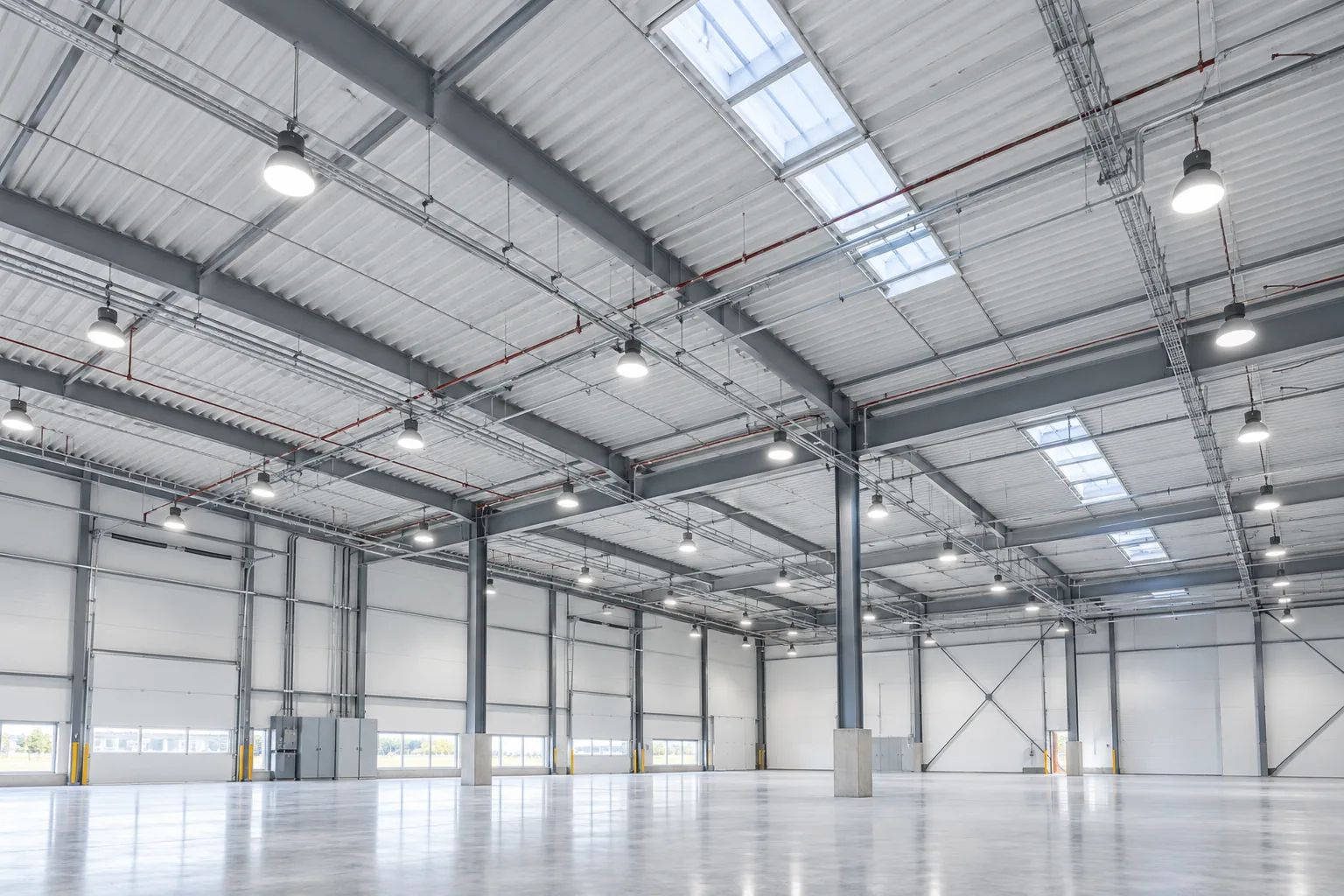
A warehouse ceiling is mostly steel, pipe and light, and every horizontal inch of it holds dust. Here’s how overhead cleaning works on a working floor.
What collects overhead.
Warehouses and distribution centers make their own dust. Pallets shed wood fibers every time a forklift sets one down, stretch wrap and cardboard leave fine scraps and paper dust, and trucks at the dock doors push street grit inside all day. Warm air carries all of it up into the structure, where it settles on the top flange of every beam, the length of every joist and the crown of every pipe.
Forklifts add a second layer. Exhaust from propane and diesel trucks leaves a grey film that binds the loose dust to steel and to light lenses, so the buildup turns from a powder into a coating. Over time high-bay lights lose their output, the roof deck darkens and clumps of debris start dropping onto product and aisles.
What gets cleaned.
Warehouse high dusting works from the top down. The crew starts at the roof deck and purlins, then moves through the bar joists, beams and bracing, the pipe and conduit runs and the cable trays. High-bay light housings and lenses come next, along with unit heaters, exhaust fans and hanging signage. The tops of the racking finish the job, since that is where anything dislodged from above lands last.
The dust is lifted and collected rather than blown around the building, which keeps it off the stock and out of the air. Painted structure, galvanized duct and bare steel each get a method suited to the finish, the same approach we bring to exposed ceilings in offices and stores.
Working around operations, aisles and racking.
A warehouse rarely closes, so the work is planned around it. The building is split into zones by aisle or by bay, and each zone is worked while it is quiet: second shift, overnight, weekends or the gap between the outbound wave and the next morning’s receiving. Pick paths and dock doors outside the active zone stay open.
Racking sets the pattern. Crews work the aisles between rows of selective racking and reach over the uprights to the beams above, finishing one aisle before moving to the next. Very narrow aisles, push-back and drive-in racking and mezzanines are mapped during the walkthrough so the equipment fits the space.
Lift access on a warehouse floor.
Most warehouse ceilings need scissor lifts or boom lifts. The plan covers where lifts enter, how they travel between bays, and where the slab, expansion joints and in-floor tracks set limits. Each active zone is marked off, and forklift traffic is routed around it while a lift is up, coordinated with the shift lead.
Clear heights, sprinklered racking and mezzanine edges all shape which lift goes where. Getting that right on paper is what keeps the nights moving and the floor undamaged.
Protecting the stock below.
Before a zone is cleaned, the top levels of racking and any open product below are covered with sheeting, and packaging lines or workstations in the zone are covered as well. When the zone is finished, covers come off cleanly with the collected debris inside, the area is reset and the next aisle is opened. Your team arrives to a clean zone with nothing moved out of place.
How often to schedule it.
Once or twice a year suits a typical storage warehouse. Busy cross-dock buildings, sites with propane fleets, open dock doors or packaged consumer goods on the top levels need it more often, and quiet storage buildings can go longer. A good rhythm is to clean once, look at how fast the deck and lenses grey again, and set the cycle from that. Our guide to how ceiling cleaning is priced explains how structure, lifts and the number of nights shape the price.
How the plan changes by building.
Say a distribution center runs two shifts. It would be cleaned overnight, a block of aisles each night, with forklift traffic routed around the active zone. A warehouse with a mezzanine office and a packing line might be done over two weekends, so the line is covered once and left alone.
A light-industrial building with high-bay lights over its production floor would pair high dusting with light fixture cleaning, timed around its shift change.
Start with a walkthrough.
The free walkthrough maps the structure, the racking, the clear heights and the quiet hours, and you get a written quote by zone. Our crews are background-checked and work evenings and weekends, so your building keeps shipping while the ceiling gets clean.
A few useful answers
Quick answers.
What causes the grey film on warehouse lights and beams?
Forklift exhaust mixes with pallet and cardboard dust and settles as a film that sticks to steel and lenses. High dusting lifts both the loose dust and the film.
Can the warehouse keep operating during high dusting?
Yes. Work runs zone by zone, with the active zone marked off and the rest of the floor in normal use.
How is stock on the racking protected?
The top levels and any open product in the zone are covered with sheeting before cleaning, then uncovered and reset when the zone is done.
Are racking tops part of warehouse high dusting?
Yes. Racking tops are cleaned last in each zone, since they catch whatever comes down from the structure above.
Which lifts are used in a warehouse?
Scissor lifts and boom lifts, chosen during the walkthrough for the clear height, aisle widths and floor in each part of the building.
Industries
Related industries
Services