
Guide
Ceiling and high dusting after construction or renovation.
A renovation leaves its fine dust everywhere overhead. Here’s how ceiling and high dusting fit into the final clean so the space opens bright.
Why a renovation greys the ceiling.
Construction makes dust that is finer than everyday dirt. Drywall sanding, tile and stud cutting, concrete grinding and saw work send particles into the air that hang there for hours before they settle. Air movers keep them circulating, and they come down on every horizontal surface in the space.
Acoustic tiles take it hardest. Their porous face holds fine powder in its texture, so a brand-new ceiling installed before the sanding finished can look dull by opening day. Grid tees, light fixtures and the top of every duct and pipe carry their own layer.
What gets coated.
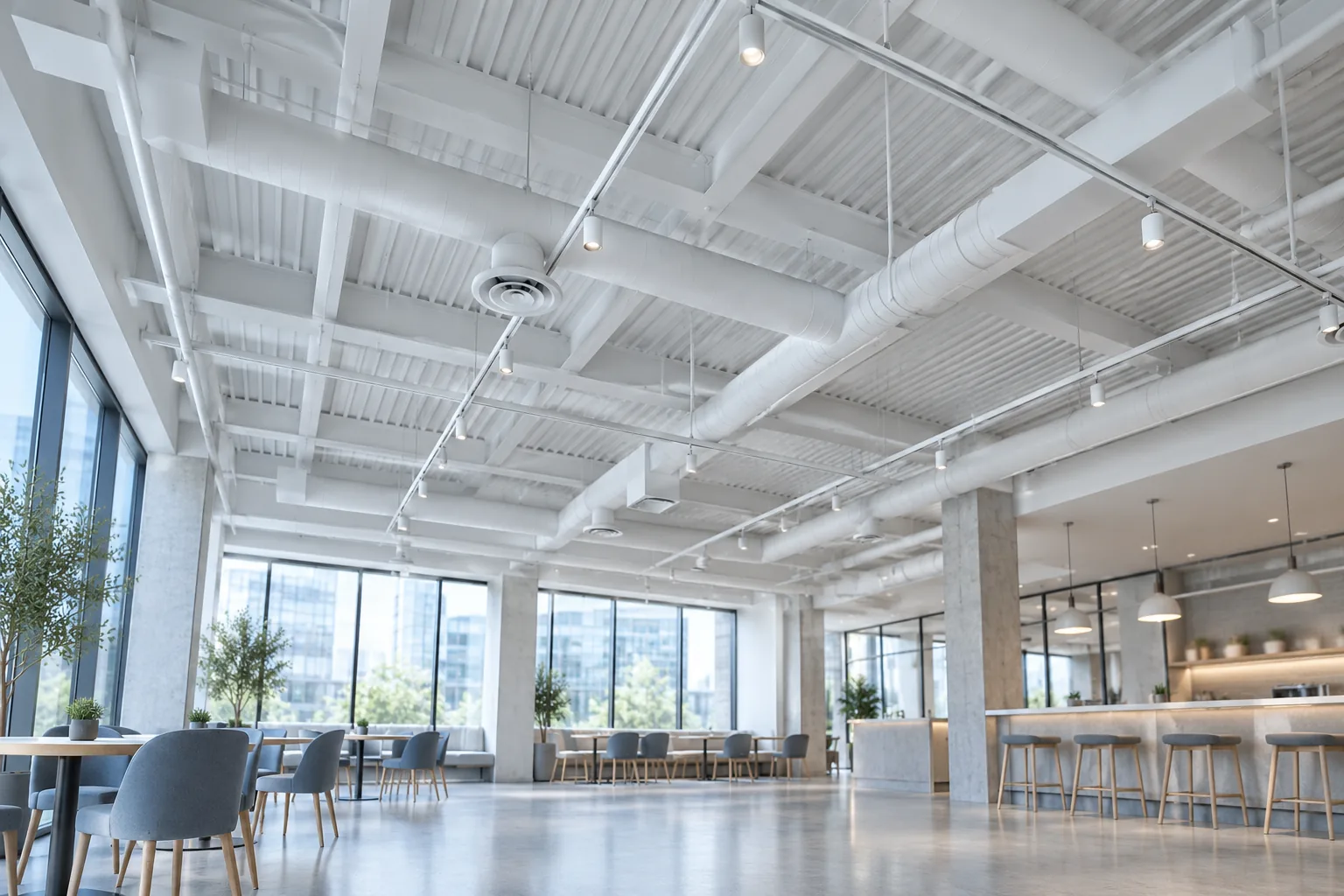
On a tile ceiling, the dust sits on the tile faces, the grid and the fixtures and vents set into the plane: lens and louver faces, trims, supply diffusers and return grilles. On an open ceiling, it coats the deck, joists, beams and bracing, plus the exteriors of ducts, pipe runs, conduit and cable trays. We clean duct and pipe exteriors, diffusers and grilles, so the whole overhead view comes up clean together.
Walls collect it too. Window heads, soffits, ledges, the tops of partitions and door frames, and new signage all hold a film that a floor-level clean never reaches.
Timing within the final clean.
Construction cleaning usually runs in stages: a rough clean while trades are still working, a final clean once the space is built, and a touch-up clean just before handover. Ceiling and high dusting belong at the start of the final clean, after the last trade has finished above the ceiling and the tiles are in, and before the floors, glass, millwork and fixtures get their final pass.
Working from the top down is the whole point. If the overhead work comes after the floor finish, dust falls onto surfaces that were just cleaned and the final crew has to start again. Done first, it lets every later step stay clean.
Protecting new finishes.
A finished space is full of surfaces that are easy to mark: new flooring, polished concrete and epoxy, stained millwork, glass, countertops and fresh paint. Floors are protected with coverings along lift routes and under the wheels, and casework, counters and installed equipment are covered before dust is moved. HEPA-filtered vacuums capture dust at the surface rather than sending it back into the air.
New ceiling finishes get the same care. Freshly painted deck and ductwork are cleaned with dry methods, timed with the painter. New tiles and fixtures are handled the way their makers recommend, so follow the tile maker’s care guidance for anything unusual.
Working with the general contractor’s schedule.
Overhead work goes smoothest when it is on the superintendent’s schedule from the start. We set site access, lift staging, working hours and which zones are released when, and we work around trades closing out their punch list. Evening and weekend shifts keep lifts out of the way of daytime crews. Our certificate of insurance goes to the general contractor ahead of mobilization, so site sign-in is settled before the first lift rolls in.
On multi-floor projects the work follows the build floor by floor, with a quick walk with the superintendent as each zone is finished.
Ready for tenant move-in.
The overhead clean is what makes a new space look finished. Bright tiles, clear lenses and dust-free ducts let the lighting plan do what it was designed to do, and tenants walk into a room that looks as good above as at desk height.
The ideal window is after the final punch list and before furniture, equipment and stock arrive. If desks, servers or shelving are already in, they are covered before work starts. Any water stains that show up during the clean are flagged for the building’s maintenance team, since they point to a leak or condensation.
How the timing plays out on three kinds of project.
On an office fit-out with a new tile ceiling and flat LED panels, drywall dust usually sits across the grid. Tiles, grid, lenses and diffusers would be cleaned over a couple of evenings after the punch list and before furniture arrives.
A restaurant remodel with a freshly painted open ceiling would have its duct tops, pendants and joists dusted once the painters finish, ahead of opening week. A warehouse with a new mezzanine would have its beams and high-bay fixtures cleaned from lifts on protected floors, zone by zone.
Planning the overhead clean.
The best time for a free walkthrough is late in the build, when the ceiling is closed and the dates are firming up. We look at each ceiling type and high surface, check lift access and floor protection, and send a written quote set out by zone. Pair it with high dusting and acoustic ceiling tile cleaning as needed, and see whether any older tiles are better swapped out in our guide to cleaning or replacing ceiling tiles. Book a walkthrough to fit it into your schedule.
A few useful answers
Quick answers.
When should post-construction high dusting happen?
At the start of the final clean, after the last trade finishes above the ceiling and before floors, glass and millwork get their final pass. Working top down keeps the later cleaning from being undone.
Do new ceiling tiles need cleaning after a renovation?
Often, yes. Tiles installed before sanding and cutting were finished hold fine construction dust in their porous face and look dull until it is lifted.
How are new floors protected from the lifts?
Lift routes and the floor under the wheels are covered before equipment moves, and routes are planned around new finishes, casework and installed equipment.
Can the overhead work happen while other trades finish up?
Yes. We work zone by zone as areas are released and schedule evenings or weekends to stay clear of daytime trades closing out their punch list.
Do you send a certificate of insurance to the general contractor?
Yes. The certificate goes to the general contractor before mobilization, so site sign-in is settled before the first lift arrives.
Services