01 / Restaurants
Restaurant ceiling cleaning
Dining rooms, bars and kitchen ceilings, including the outside of the hood canopy, cleaned around service.
View details
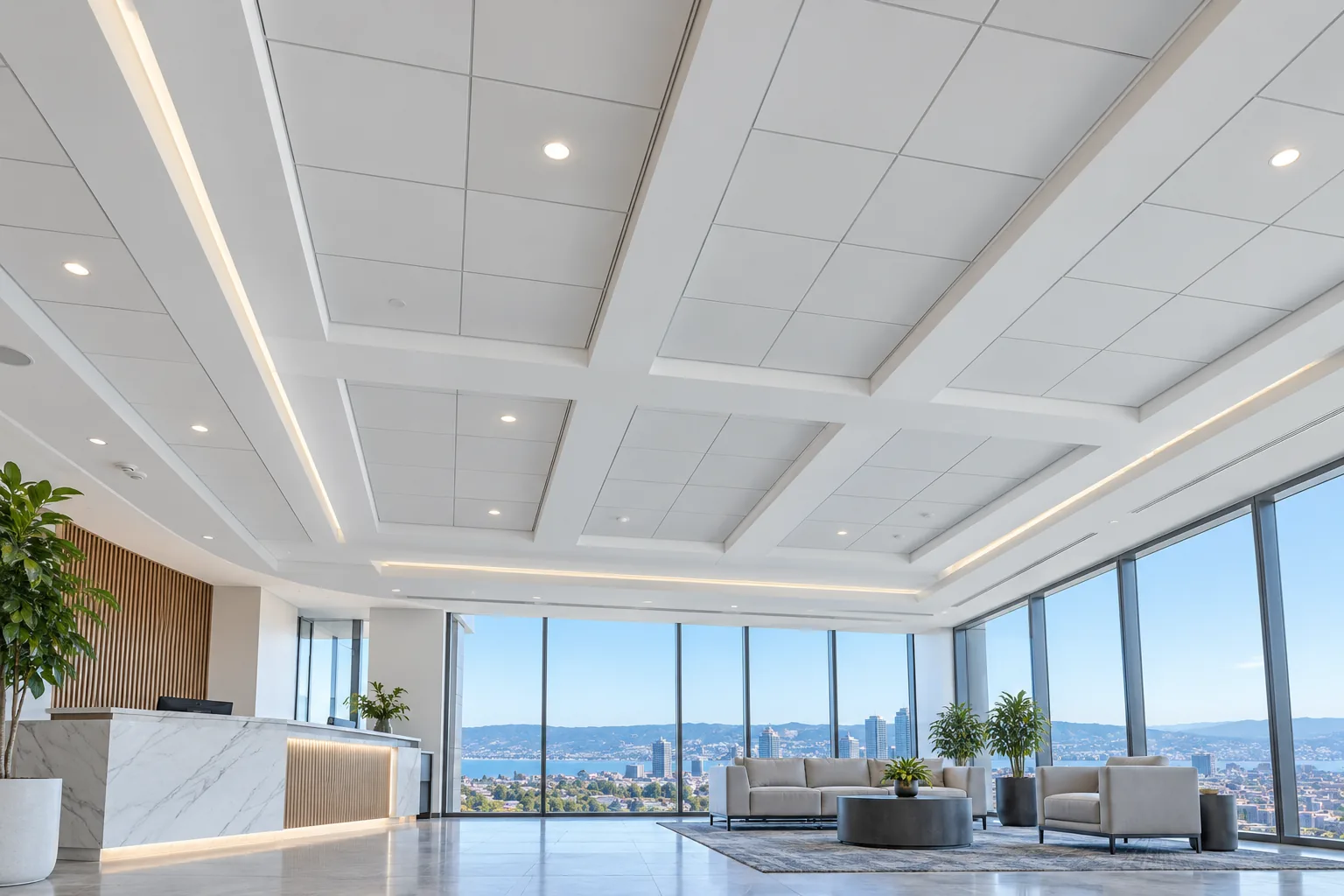
Every building has a ceiling. We make it shine.
Restaurants and grocery stores are our specialty, and we bring the same results to offices, stores, warehouses, schools and more.
Our specialty
Places where customers look up, and where a clean ceiling makes the whole space feel fresher.
01 / Restaurants
Dining rooms, bars and kitchen ceilings, including the outside of the hood canopy, cleaned around service.
View details02 / Grocery
High ceilings, light rows and signage above the aisles, cleaned around store hours.
View detailsAlso serving
Wherever there’s a ceiling, we can make it look better.
01
Brighter tile ceilings, lobbies and open ceilings that impress visitors and staff.
See tile ceiling cleaning02
Clean ceilings, lighting and signage that make products look their best.
See commercial ceiling cleaning03
High dusting for beams, pipes and lighting above the floor.
Read the warehouse guide04
Classrooms, gyms, sanctuaries and stages, scheduled around the school year and the service calendar.
Read the tall-rooms guide05
Waiting rooms, corridors and exam rooms, with ceilings and vents cleaned to the practice’s protocol.
See vent and fixture cleaning06
Lobbies, ballrooms and atriums with high ceilings and statement lighting.
Read the hotel guideThe ceiling is only half of what decides a cleaning plan; the other half is what happens underneath it. An office has desks, screens and cabling below a tile grid. A store has merchandise and fixtures. A warehouse has racking, stock and forklift lanes. A school runs on a calendar with long breaks. Access, protection and timing are planned around those details first, then the methods are chosen for the ceiling itself.
That is why one service looks different from one setting to the next. High dusting in a warehouse is a lift-based job over long runs of structure, while in a boutique store it is a careful evening spent on signage and track lights. The walkthrough captures how your space runs so the written plan fits it.
In an office, the place to start is the tile ceiling in reception, conference rooms and open work areas, paired with the vents and lighting so the whole plane looks even. Work happens after hours or at weekends with workstations covered. Tech campuses add atriums and open-structure cafés that suit exposed ceiling cleaning.
Schools fit ceiling work into the academic calendar, with gyms, halls and classrooms scheduled over breaks or weekends. Medical offices cover waiting rooms, corridors, and exam and procedure rooms, along with the vents that mark the ceiling above them, cleaned to the practice’s own protocol after the last appointment of the day with seating and equipment covered.
Warehouses and manufacturing plants carry the most structure overhead: beams, bar joists, pipe runs, conduit and long rows of high-bay lights. These buildings keep busy schedules, so high dusting is planned bay by bay around production, deliveries and the stock below.
Hotels and event venues are about presentation. Lobbies, ballrooms and atriums have tall ceilings, statement lighting and high walls that guests photograph. Ceiling work fits between events, with the floor protected and the room reset before setup crews arrive.A few useful answers
No. They’re our specialty, and we also clean ceilings in commercial kitchens, food halls, offices, business parks, data centers, warehouses, schools, medical and treatment facilities and hotels.
Everything overhead that guests, shoppers and staff see: dining rooms, bars and sales floors, plus kitchen ceilings, vents and lights, including the outside of hood canopies.
Yes. Shelving, displays, tables and equipment are covered before work starts.
Yes. Classrooms, halls and gyms are scheduled over breaks, evenings or weekends, so ceiling work stays clear of lessons.
Height and scale. Warehouse work relies on lifts, covers long runs of beams and pipe, and is routed around racking and forklift lanes.
The surfaces are familiar, but the timing and protocol change. Waiting rooms, corridors and exam rooms are cleaned once the last patient has left, with chairs and equipment covered. Crews are trained in bloodborne-pathogen safety, and their HIPAA-aware conduct means patient charts and files stay unread and exactly where staff left them.